| aaaa | aaaa |
|
a |
|
||
| a | aa | |||||
| a |
|
AAA | Curator's
Note |
|||
A proficient person in new art trends -products of technology and electronic means of our age- could characterize the artists as almost traditional, since they all use canvases, wood and brushes instead of "installations", digital processes and video art. However, even nowadays, painting continues, as intensely as before and along with the new art identity, to assemble the past, to register traces of life and to instigate a dialogue between the perpetually moving time and the imprinted moment. This way, the creators of ΜοΤeR 1 reflect reality, time, memory, anxiety, respect for the past and their conflict with the conventional through their work. With exactly the same function of a motor -conversion of a form of energy into kinetic energy-, the painters perceive the present by composing dynamic representations, stimulating vision and transforming substance into multiple energy fields. (Note: Mo.Te.R or 'moter' is motor in English). The cultural heritage of the future is the authentic artistic production of our days, as the one presented at the group exhibition of the 9 artists (24 Nov-7 Dec 2001), as well as in the series of single exhibitions that follow. |
||||||
Ι Ι |
||||||
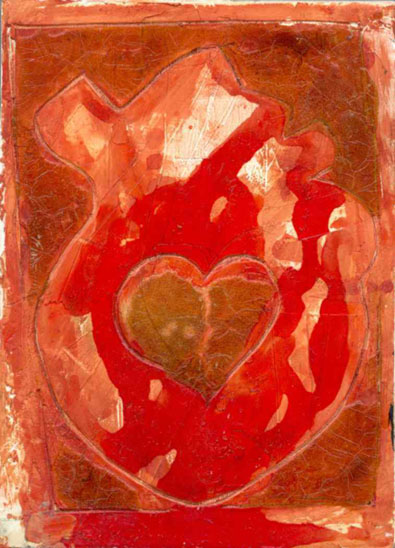
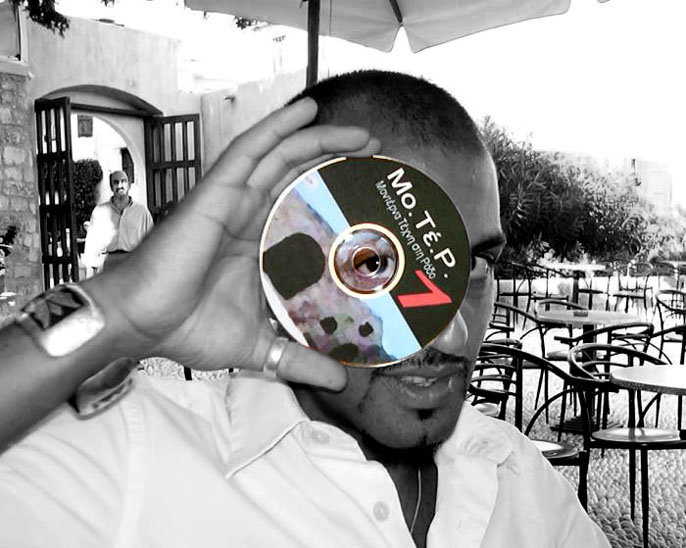 Kyourh (8
Dec 2001- 4 Jan 2002), the youngest of the group, works on small surfaces (13x18
cm) turning everyday objects of his environment into tools of criticism. Using sponges,
fabrics, pegs, parts of phone-cards, CDs, playing cards, pieces of iron, paper, stickers,
insulating tape and lots of other materials of no value, he assembles his own microcosm.
Marked by time and usage, those materials mixed with oils, varnishes and acrylics are
absorbed by the wooden surface. His memories blended with remarks are altered into
miniatures-works of art, imprints of everyday experiences. The materials are recycled to
illustrate conflicting ideas, social statuses and notions. Kyourh's works have a
tremendous power and an inconspicuous splendor of colours. They cause satisfaction in
vision, the need for touch and mood for mental games. Kyourh (8
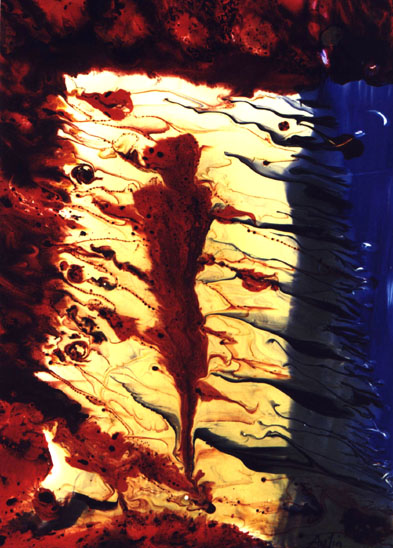
Dec 2001- 4 Jan 2002), the youngest of the group, works on small surfaces (13x18
cm) turning everyday objects of his environment into tools of criticism. Using sponges,
fabrics, pegs, parts of phone-cards, CDs, playing cards, pieces of iron, paper, stickers,
insulating tape and lots of other materials of no value, he assembles his own microcosm.
Marked by time and usage, those materials mixed with oils, varnishes and acrylics are
absorbed by the wooden surface. His memories blended with remarks are altered into
miniatures-works of art, imprints of everyday experiences. The materials are recycled to
illustrate conflicting ideas, social statuses and notions. Kyourh's works have a
tremendous power and an inconspicuous splendor of colours. They cause satisfaction in
vision, the need for touch and mood for mental games. |
||||||
|
||||||
Ι |
||||||
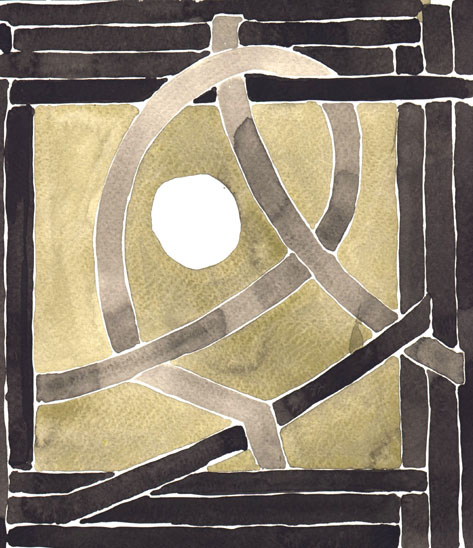
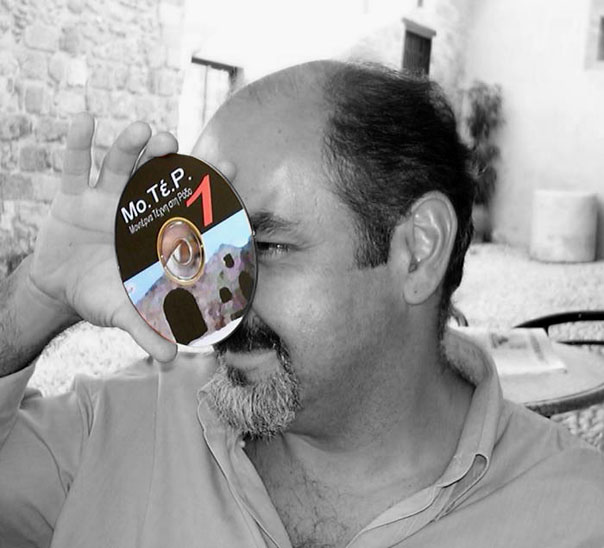 Michel Foucault
writes that "representation is a form of power". The "activist" of ΜοΤeR 1, Vessal Maani (5 Jan-18 Jan 2002), via that
form of power and his own artistic manner, uses art as a means of rehabilitation and
therapy and as a common creative activity for conflict resolution. The language of art can
operate as a source of knowledge and a foundation for a common ground of values. He
himself, being a bearer of cultures empirically (Persia, England, Ireland, Greece),
manifests multifarious experiences. His recent work is divided in two categories. The
first one consists of artworks with striking ethnic patterns ("culturalised"
folklore), paying homage to the linear crafts and the ornamentation of cultures and
traditions. The second one is composed of a range of watercolors that radiate romantic
feeling, sensitivity, simplicity…means of decoding a serene, reconciled life. Michel Foucault
writes that "representation is a form of power". The "activist" of ΜοΤeR 1, Vessal Maani (5 Jan-18 Jan 2002), via that
form of power and his own artistic manner, uses art as a means of rehabilitation and
therapy and as a common creative activity for conflict resolution. The language of art can
operate as a source of knowledge and a foundation for a common ground of values. He
himself, being a bearer of cultures empirically (Persia, England, Ireland, Greece),
manifests multifarious experiences. His recent work is divided in two categories. The
first one consists of artworks with striking ethnic patterns ("culturalised"
folklore), paying homage to the linear crafts and the ornamentation of cultures and
traditions. The second one is composed of a range of watercolors that radiate romantic
feeling, sensitivity, simplicity…means of decoding a serene, reconciled life. |
||||||
|
||||||
Ι |
||||||
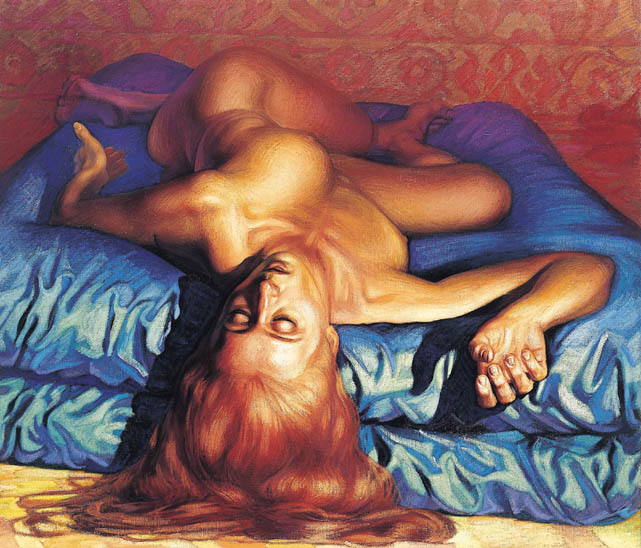
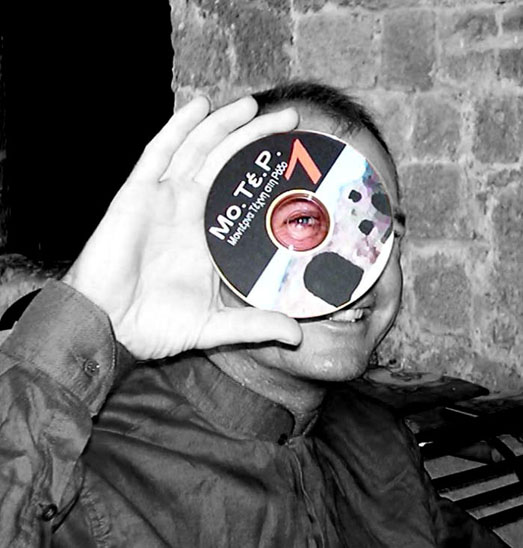 Michael
Newberry's work (19 Jan-1 Feb 2002), surpasses the epidermic registration and
functions in an absolute anatomic detailed way. The duality of chiaroscuro (light and
shadow) in its classical expression is depicted on the canvas. His studies on the human
body are soaked with intense mobility and realistic aspect, creating almost biblical
figures. There is a strong metaphysical aura in his colourings, an indefinite relation
between the earthy and the transcendental in the pose of his bodies, and ecstasy and
reverence in his structured shapes; attractive heroes, flood-lit bodies, hedonistic
stances that manifest self-confidence, representations of perfect figures which serve as
an awakening in an imperfect world. Newberry, who declares himself a supporter of
Neo-Enlightenment, is opposed to the post-modern rules and remains loyal to the moral
values of arts, absolutely devoted to the science of aesthetics. Michael
Newberry's work (19 Jan-1 Feb 2002), surpasses the epidermic registration and
functions in an absolute anatomic detailed way. The duality of chiaroscuro (light and
shadow) in its classical expression is depicted on the canvas. His studies on the human
body are soaked with intense mobility and realistic aspect, creating almost biblical
figures. There is a strong metaphysical aura in his colourings, an indefinite relation
between the earthy and the transcendental in the pose of his bodies, and ecstasy and
reverence in his structured shapes; attractive heroes, flood-lit bodies, hedonistic
stances that manifest self-confidence, representations of perfect figures which serve as
an awakening in an imperfect world. Newberry, who declares himself a supporter of
Neo-Enlightenment, is opposed to the post-modern rules and remains loyal to the moral
values of arts, absolutely devoted to the science of aesthetics. |
||||||
|
||||||
Ι |
||||||
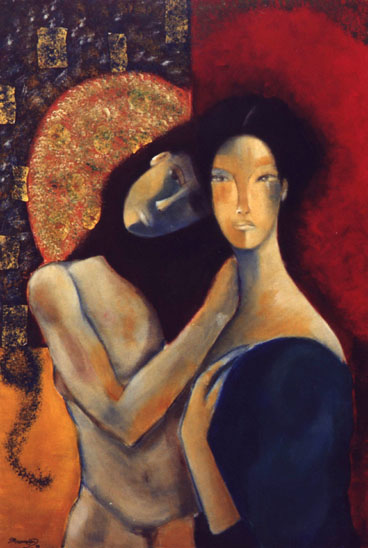
 With a
specialized look focused on the artists-masters of the 20th century, Vicky
Marinopoulou (2 Feb-15 Feb 2002) creates with an indisputably personal style in
terms of approach, choice, colours and "perspective". With acrylics and in a
manner of expressionism she produces still-life images as well as figurative compositions.
The first ones contradict their term (still life/ natura morta) due to their lively,
vibrant colours, their warmth and organic life. The second ones represent women-replicas
that are recreated, often two women in one painting (alter ego?) and stand as totemic
monuments, looking directly at the viewer in silent austerity. The Modigliani-like shape
on the faces is frequently transformed into an elliptic sculpture-mask. With deep
outlines, rejection of perspective and an elaborate decorative background (relation to
Klimt), the fragmented romantic spirit of our time appears through the interesting work of
Marinopoulou. With a
specialized look focused on the artists-masters of the 20th century, Vicky
Marinopoulou (2 Feb-15 Feb 2002) creates with an indisputably personal style in
terms of approach, choice, colours and "perspective". With acrylics and in a
manner of expressionism she produces still-life images as well as figurative compositions.
The first ones contradict their term (still life/ natura morta) due to their lively,
vibrant colours, their warmth and organic life. The second ones represent women-replicas
that are recreated, often two women in one painting (alter ego?) and stand as totemic
monuments, looking directly at the viewer in silent austerity. The Modigliani-like shape
on the faces is frequently transformed into an elliptic sculpture-mask. With deep
outlines, rejection of perspective and an elaborate decorative background (relation to
Klimt), the fragmented romantic spirit of our time appears through the interesting work of
Marinopoulou. |
||||||
|
||||||
Ι |
||||||
 Maria
Anezia (16 Feb-2 Mar 2002) paints on glass of small size. She works on the
colours using small brushes and tools, and with great detail creates shapes as the ones we
discover looking at the clouds or the rocks. Her figures belong to bizarre environments:
canyons, waves, melted metals, routes of light, rope, bowels of an earth of her own. Out
of the four elements of nature that she depicts, her favourite is the one of water. Her
aquatic figures -perhaps a symbolic representation of mythological goddesses of water- are
mysterious pictures that stir up imagination. Sometimes ethereal and romantic (familiar)
and other times trapped and anxious (nightmarish), the figures, hints of bodies, trace
routes and leave their imprint upon her swaying conceptions. Maria
Anezia (16 Feb-2 Mar 2002) paints on glass of small size. She works on the
colours using small brushes and tools, and with great detail creates shapes as the ones we
discover looking at the clouds or the rocks. Her figures belong to bizarre environments:
canyons, waves, melted metals, routes of light, rope, bowels of an earth of her own. Out
of the four elements of nature that she depicts, her favourite is the one of water. Her
aquatic figures -perhaps a symbolic representation of mythological goddesses of water- are
mysterious pictures that stir up imagination. Sometimes ethereal and romantic (familiar)
and other times trapped and anxious (nightmarish), the figures, hints of bodies, trace
routes and leave their imprint upon her swaying conceptions. |
||||||
|
||||||
Ι |
||||||
 Angelos
Spartalis (2 Mar-15 Mar 2002) strives to depict the power of painting -its
violent and sensitive sides-, through his art, considering important the rejection of any
sort of categorization. He creates art "deriving directly from colour" (Goethe),
never-ending games of the 'being' and the 'being seen', of pictures and reflection images,
an always anthropocentric art. His anti-minimal canvases accelerate tension and the
viewer's pulse, and become archetypes of a two-faced world: the comic and the tragic. In
the first case, Spartalis amuses the viewer with his chromatic tricks and the skillful
child-like figures and environments. In the second case, the opposition of the artist to
the beautified art is declared. The idea of the fragmented body ("specks" of
Francis Bacon's work) and the construction of its mechanistic, dysfunctional replica
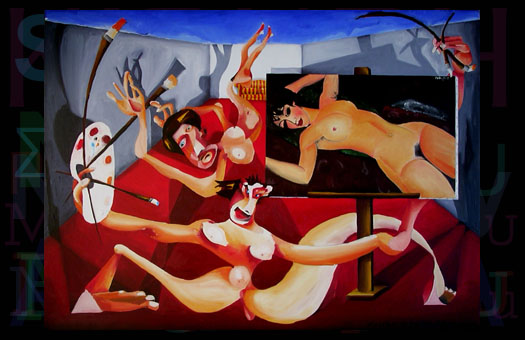
emerge from his heterodox art manifestations. Angelos
Spartalis (2 Mar-15 Mar 2002) strives to depict the power of painting -its
violent and sensitive sides-, through his art, considering important the rejection of any
sort of categorization. He creates art "deriving directly from colour" (Goethe),
never-ending games of the 'being' and the 'being seen', of pictures and reflection images,
an always anthropocentric art. His anti-minimal canvases accelerate tension and the
viewer's pulse, and become archetypes of a two-faced world: the comic and the tragic. In
the first case, Spartalis amuses the viewer with his chromatic tricks and the skillful
child-like figures and environments. In the second case, the opposition of the artist to
the beautified art is declared. The idea of the fragmented body ("specks" of
Francis Bacon's work) and the construction of its mechanistic, dysfunctional replica
emerge from his heterodox art manifestations. |
||||||
|
||||||
Ι |
||||||
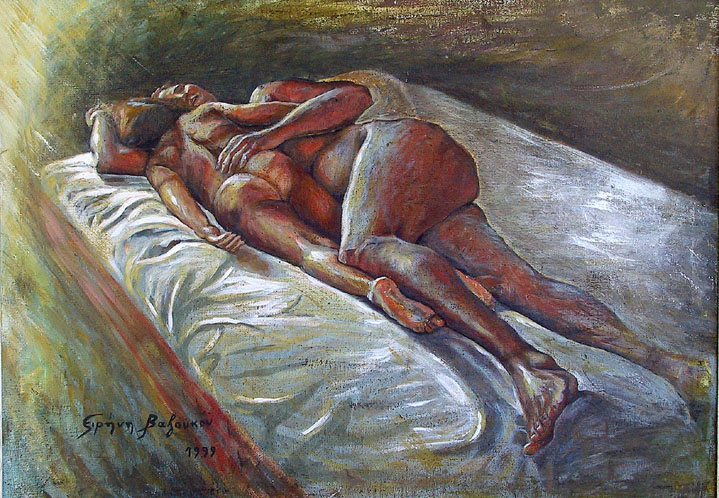
 The human body
plays a fundamental role in the paintings of Irene Vazoukou (16 Mar-29 Mar 2002).
In the past, her heroes or heroines performed "at the service of melancholy"
(Derrida). Made in an expressionist way, they symbolized despair, pain, isolation, the
"damnatio memoriae" (condemnation of memory). Her new series of paintings
preserve the potent characteristics of her previous work and reveal her apparent progress
in the course of time, as well as, the experimentations of her stylistic approach. She
introduces novelty in her work with restrained optimism, by dealing with warm familiarity
in colours and a tender connection to her close environment. She "captures" the
figure in a chair, on the floor, on a bed, sometimes with rough and other times with soft,
delicate brushstrokes. On the canvas, a stream of light carries dark parts away… The human body
plays a fundamental role in the paintings of Irene Vazoukou (16 Mar-29 Mar 2002).
In the past, her heroes or heroines performed "at the service of melancholy"
(Derrida). Made in an expressionist way, they symbolized despair, pain, isolation, the
"damnatio memoriae" (condemnation of memory). Her new series of paintings
preserve the potent characteristics of her previous work and reveal her apparent progress
in the course of time, as well as, the experimentations of her stylistic approach. She
introduces novelty in her work with restrained optimism, by dealing with warm familiarity
in colours and a tender connection to her close environment. She "captures" the
figure in a chair, on the floor, on a bed, sometimes with rough and other times with soft,
delicate brushstrokes. On the canvas, a stream of light carries dark parts away… |
||||||
|
||||||
Ι |
||||||
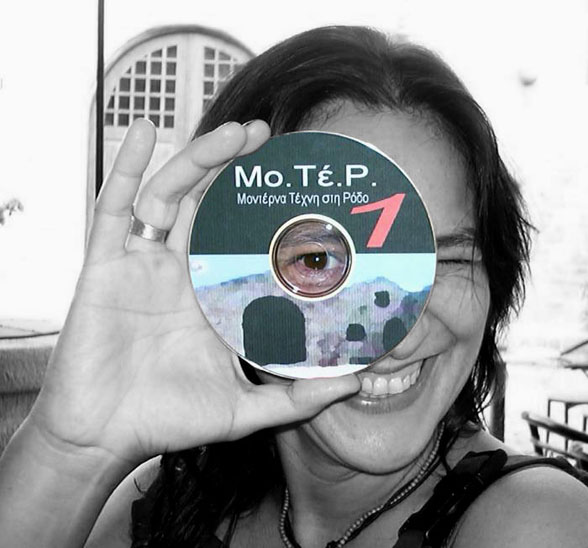 The paintings of Katerina
Pazourou (30 Mar-12 Apr 2002) create webs of Mediterranean landscapes. They are
landscapes of several parts with concentrated 'imagerie' from her travels in Spain and
Greece. The colours of her palette do not illustrate essence but they are transformed into
essence. They catch hold of the alternations of the land (texture) and construct it in
curved lines-rhythms. Bulks become chain mechanisms of warm and cool gradations, applying
particular alchemy to the thick brushstrokes of green and yellow. The clear-cut
compositions (often recalls from Matisse) bring out feelings of serenity and calmness, and
a pleasant gaze from one part of the art-piece to another. Nature is not copied but,
instead, redrawn in new forms -sometimes with naive features- that convert the existing
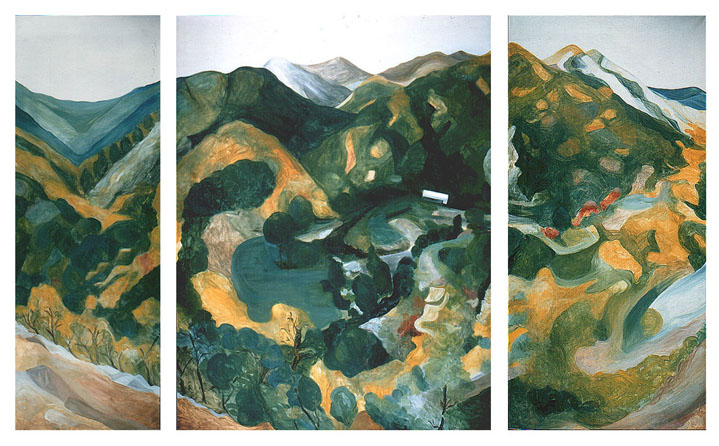
subject into lyrical, or even better, sensuous representations. The paintings of Katerina
Pazourou (30 Mar-12 Apr 2002) create webs of Mediterranean landscapes. They are
landscapes of several parts with concentrated 'imagerie' from her travels in Spain and
Greece. The colours of her palette do not illustrate essence but they are transformed into
essence. They catch hold of the alternations of the land (texture) and construct it in
curved lines-rhythms. Bulks become chain mechanisms of warm and cool gradations, applying
particular alchemy to the thick brushstrokes of green and yellow. The clear-cut
compositions (often recalls from Matisse) bring out feelings of serenity and calmness, and
a pleasant gaze from one part of the art-piece to another. Nature is not copied but,
instead, redrawn in new forms -sometimes with naive features- that convert the existing
subject into lyrical, or even better, sensuous representations. |
||||||
|
||||||
Ι |
||||||
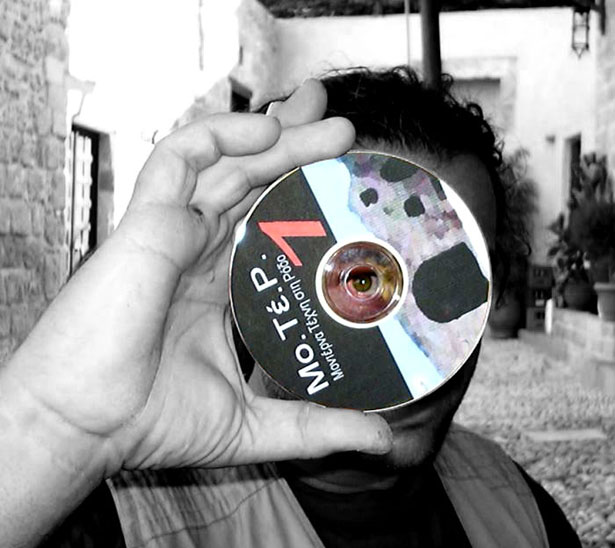 Panagiotis
Brademas (13 Apr-26 Apr 2002) uses abundant light in his work. The conjugations
of subject-object, content-form, abstraction-realism, and representation-meaning are
exposed and correlated with harsh light being their absolute guide. Particularly in the
last series ("Day Cruises"), his acute sight leads the light onto the canvases
as it, finally, overflows strongly onto the bodies and the "plain" faces. The
application of various chromatic tones and layers of shadow-light, along with outpourings
of colour and elaborate impastos, aid the artist in immobilizing, and, eventually,
registering the moment. Movement does not exist; it is only the moment captured, bringing
time to a halt. The pioneering mastery turns into 'camera obscura' and the warm colours of
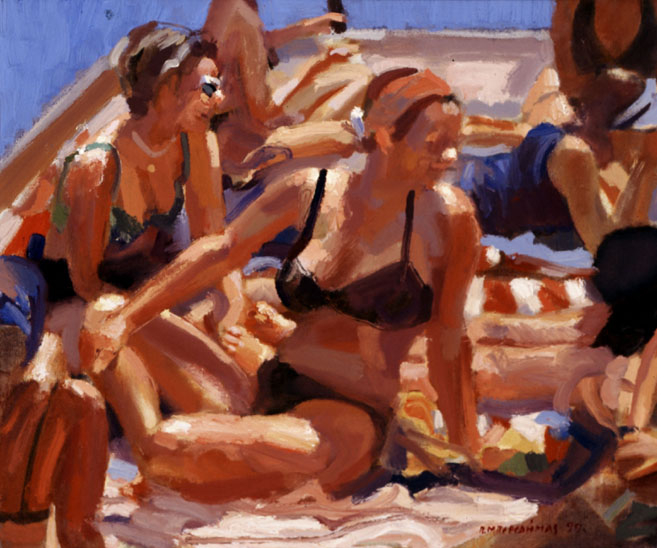
Brademas's palette deify his power of picture formation. Panagiotis
Brademas (13 Apr-26 Apr 2002) uses abundant light in his work. The conjugations
of subject-object, content-form, abstraction-realism, and representation-meaning are
exposed and correlated with harsh light being their absolute guide. Particularly in the
last series ("Day Cruises"), his acute sight leads the light onto the canvases
as it, finally, overflows strongly onto the bodies and the "plain" faces. The
application of various chromatic tones and layers of shadow-light, along with outpourings
of colour and elaborate impastos, aid the artist in immobilizing, and, eventually,
registering the moment. Movement does not exist; it is only the moment captured, bringing
time to a halt. The pioneering mastery turns into 'camera obscura' and the warm colours of
Brademas's palette deify his power of picture formation. |
||||||
|
||||||
Ι |
||||||
Nine artists of different origins, influences, studies and experiences. Artists who live on Rhodes island; an island-conservatory of new artists and the steady point of renowned creators. Artists who turn small into major. Miniatures of soul, great artworks. _ _ |
||||||
| aaaa |
more information on...
|
|||||
| aaaa | aaaa | |||||
 aa
aa